

Disclaimer: I am not a lawyer. This is not legal advice. None of the information provided shall or can be treated as such. This article is strictly for educational and entertainment purposes.
Building a Voice AI platform that scales to millions of calls is a complex engineering challenge. Making that same platform compliant with HIPAA (US) and GDPR (EU) introduces an entirely new layer of strict constraints.
When dealing with voice, you are handling highly sensitive biometric data. To stay compliant, you must ensure that all protected information is concealed, properly routed, and never stored on unauthorized servers.
Here is a breakdown of the legal foundations, how compliance impacts the standard Voice AI pipeline, and practical architectural approaches from actual production deployments.
The Legal Foundation: HIPAA vs. GDPR
The easiest way to approach compliance is to structure the requirements. For HIPAA, the focus is on Protected Health Information (PHI). For GDPR, it is Personally Identifiable Information (PII).
In both cases, you must ensure zero-data-retention policies across your entire pipeline. If you use third-party vendors, they cannot store your data or use it to train their models. Furthermore, data localization matters: HIPAA generally requires US-based processing, while GDPR strictly requires EU-based processing.
| Requirement Category | 🇺🇸 HIPAA (US Healthcare) | 🇪🇺 GDPR (EU Citizens) |
|---|---|---|
| Core Protected Data | PHI (Protected Health Information). Includes voice recordings if tied to health/identity. | Personal Data & Biometrics. Voice is explicitly categorized as highly sensitive biometric data. |
| Required Contracts | BAA (Business Associate Agreement). Required with every vendor (LLM, STT, TTS, Cloud). | DPA (Data Processing Agreement). Required with every third-party sub-processor. |
| Vendor AI Models | Must use Enterprise APIs with zero-data-retention, covered by a BAA. Otherwise, self-host. | Must use Enterprise APIs with zero-data-retention, covered by a DPA. Otherwise, self-host. |
| Breach Notification | Up to 60 days to notify HHS and individuals (though hospital BAAs often demand 24-48 hours). | 72 hours to notify the relevant supervisory authority after discovering the breach. |
| User Consent | Handled via Notice of Privacy Practices (NPP). Explicit authorization needed for non-treatment AI. | Explicit, active opt-in consent required before recording begins (e.g., “Press 1 to consent”). |
| Data Deletion | No strict “right to be forgotten.” Medical records must often be retained for state-mandated periods. | Right to be Forgotten. Must have a programmatic way to permanently delete audio/transcripts. |
| Data Access | Right to Access & Amend. Patients can request transcripts and ask for corrections. | Right to Access & Portability. Users can request a copy of all their data in a readable format. |
| Data Location | US-based servers are standard. Offshore processing is highly restricted by hospital BAAs. | Data Localization. EU citizens’ voice data/transcripts should be processed and stored in the EU. |
| Security Standards | Encryption (transit/rest), strict RBAC, MFA, and detailed audit logging of who viewed what. | Encryption (transit/rest), strict RBAC, MFA, and data pseudonymization/anonymization. |
| Data Scrubbing | De-identification (Safe Harbor). Removing 18 specific identifiers from transcripts. | Data Minimization. Only collect what is strictly necessary and redact PII before storage. |
The Voice AI Pipeline & Compliance Interventions
A typical Voice AI pipeline operates in a continuous loop: Transport → Telephony → Voice Activity Detection (VAD) → Speech-to-Text (STT) → LLM → Text-to-Speech (TTS). This is usually orchestrated by frameworks like Pipecat or LiveKit.
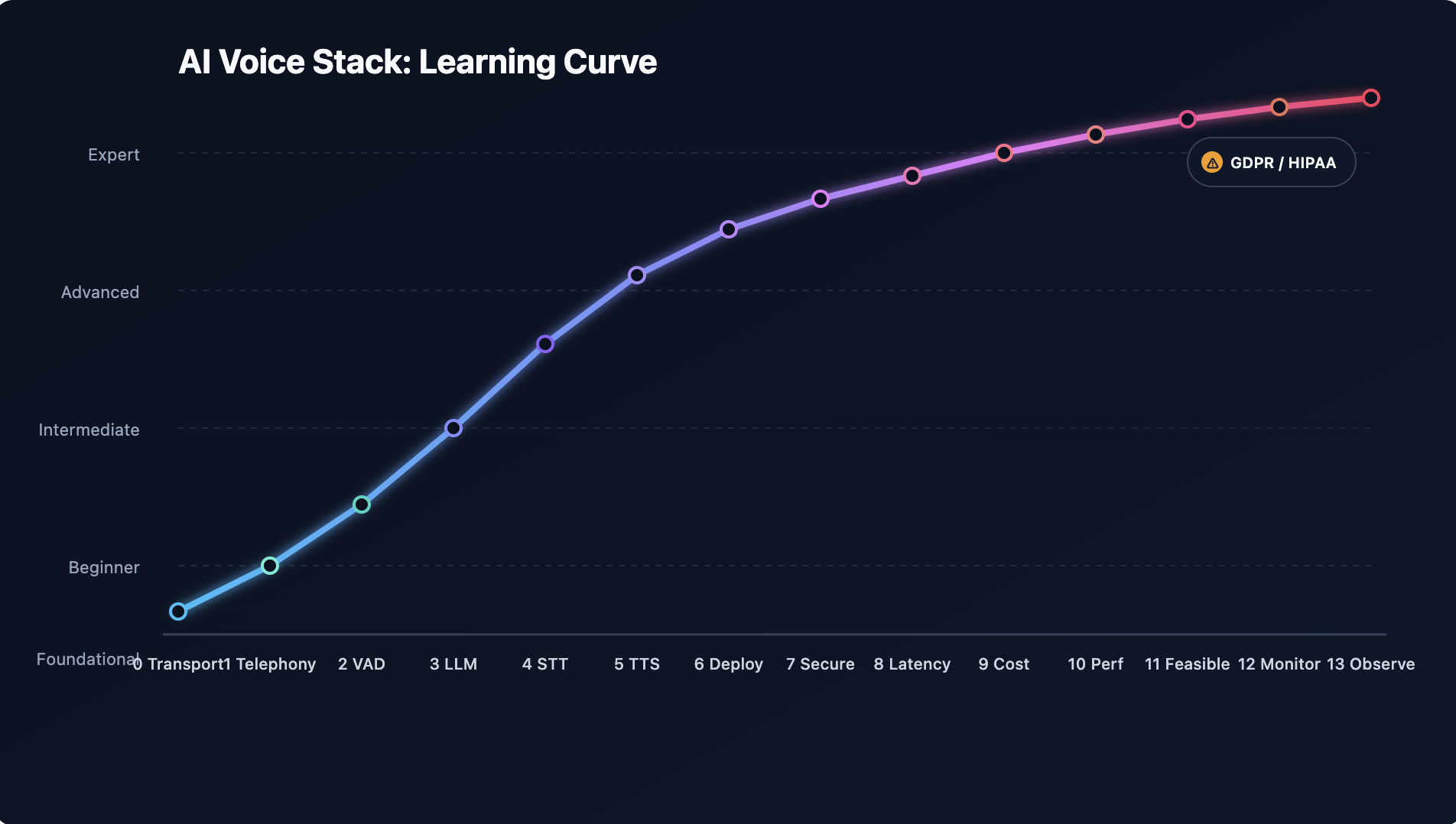
To secure this pipeline, you must limit the surface area of exposed information. Practical interventions include:
- Redaction Models: Place a lightweight redaction model (e.g., a 1GB local model) between the STT and LLM layers. If a user says, “Hi, my name is Piotr and my SSN is…”, the model intercepts and outputs, “Hi, my name is [REDACTED] and my SSN is [REDACTED]” before it ever reaches the LLM.
- STT Provider Settings: Providers like Deepgram often have built-in settings to automatically redact PII or PHI at the transcription layer.
- Background Scrubbing Agents: Deploy background processes that scrub logs and database entries to ensure no sensitive data is inadvertently stored.
To remain compliant, you have two choices: own every single part of this pipeline, or sign a BAA/DPA with every vendor that touches the data.
Stay ahead of Voice AI engineering
Get production insights, architecture breakdowns, and founder interviews delivered straight to your inbox.
Subscribe to the NewsletterThe Triangle of Decisions: Architectural Trade-offs
How do you optimize for compliance without ruining the user experience? As with most engineering challenges, it comes down to trade-offs.
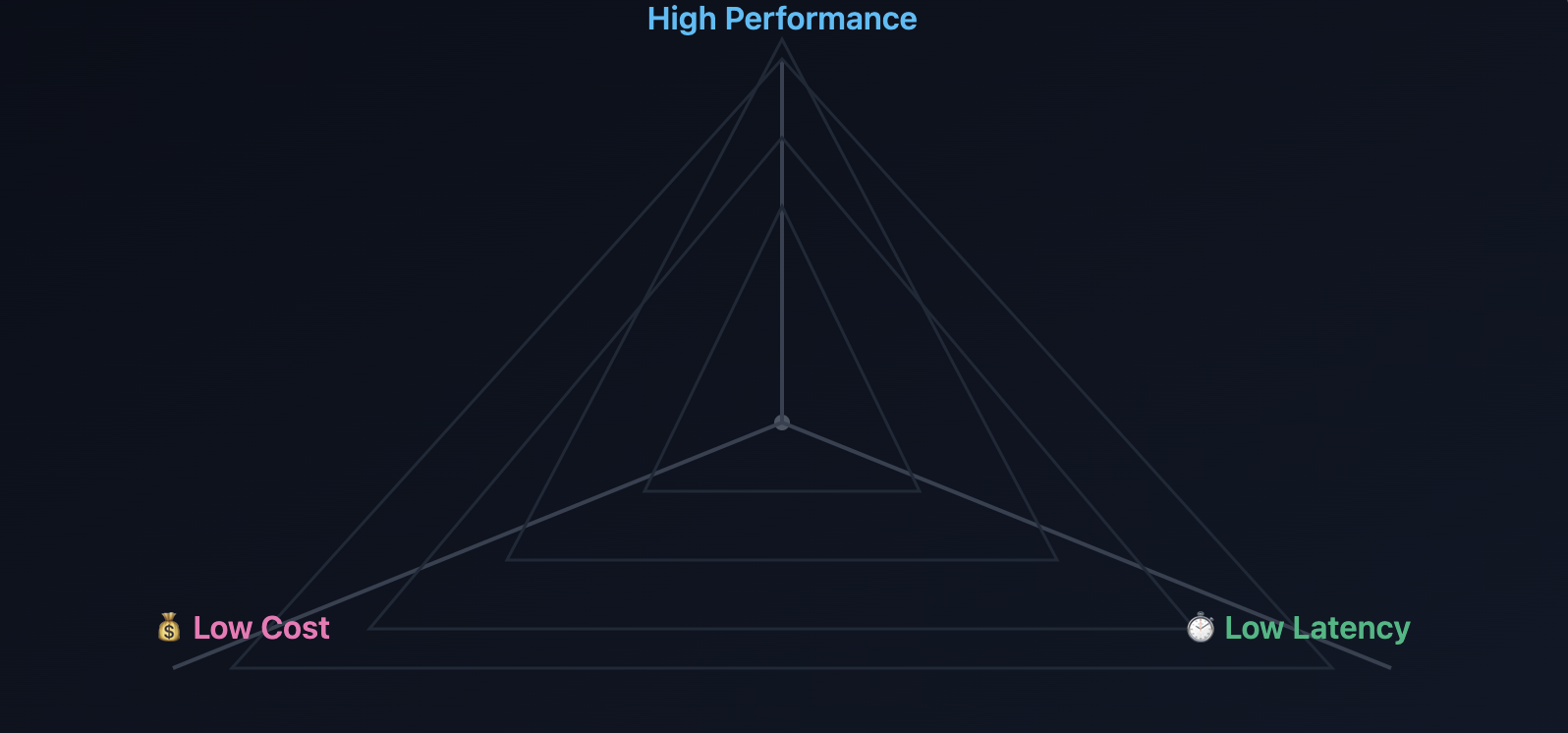
Before selecting an architecture, define your primary business goal. Are you optimizing for the lowest possible latency? The lowest cost at scale? Or maximum control and compliance? You rarely get all three simultaneously.
Here are four practical production approaches:
1. Managed All-in-One Providers
Great for teams that need compliance quickly and don’t expect exponential complexity growth. However, be mindful of data localization. Providers like VAPI are strictly US-based, making them viable for HIPAA but highly problematic for GDPR.
2. Full On-Premise Deployment
Hosting the LLM, STT, and TTS on your own infrastructure. This is common for large enterprises with complex call center integrations. It yields excellent cost-efficiency at high volumes and ticks every compliance box, but requires significant engineering overhead.
3. The Hybrid Route
Often the sweet spot. You self-host the telephony and orchestration (e.g., Pipecat/LiveKit) to maintain strict control over the audio streams, but utilize compliant inference providers (AWS Bedrock, Azure OpenAI, Telnyx) for STT and LLM processing. This keeps costs manageable while leveraging state-of-the-art models.
4. 100% On-Device Processing
Handling all data directly on the user’s device. While this is the ultimate solution for privacy, current hardware limitations mean the performance and latency are rarely good enough for complex conversational use cases today. Watch this space over the next year.
✅ The Developer’s Compliance Checklist
If you are building a Voice AI system today, use this checklist to ensure your foundation is secure.
1. Legal & Vendor Management
- Sign a BAA (HIPAA) or DPA (GDPR) with your cloud provider (AWS, GCP, Azure).
- Sign a BAA/DPA with AI Providers (OpenAI, Anthropic, Deepgram, ElevenLabs).
- Verify Zero Data Retention: Ensure vendors explicitly state they do not use your API inputs (audio/text) to train their foundational models.
- Self-Hosting Fallback: If a provider (like a specific VAD or Turn Detection model) won’t sign a BAA/DPA, you must self-host it on compliant infrastructure.
2. Architecture & Security
- Encryption in Transit: All audio streams (WebRTC, WebSockets) and API calls use TLS 1.2+.
- Encryption at Rest: All databases and object storage (S3) storing audio or transcripts use AES-256 encryption.
- PII/PHI Redaction Layer: Implement a scrubbing tool (like Microsoft Presidio) to mask names, SSNs, and medical conditions in the transcript before saving to the database or sending to logging tools.
- Access Controls (RBAC): Implement Role-Based Access Control and MFA for any dashboard where employees can view transcripts or listen to audio.
3. User Rights & Operations
- Consent Mechanism: Build a clear opt-in flow before the microphone activates.
- Audit Logging: Maintain unalterable logs of who accessed what data and when (Crucial for HIPAA).
- Data Management Dashboard: Build UI/API endpoints for users to request data exports or account deletion (GDPR Right to be Forgotten).
- Incident Response Plan: Have a documented process to detect, contain, and report breaches within the 72-hour (GDPR) or 60-day (HIPAA) windows.
Need help navigating Voice AI compliance?
If you need to ensure your pipeline is secure, scalable, and cost-effective, let’s audit your architecture and scope your next steps.